
Key updates

New rules for WA produce & deli bags
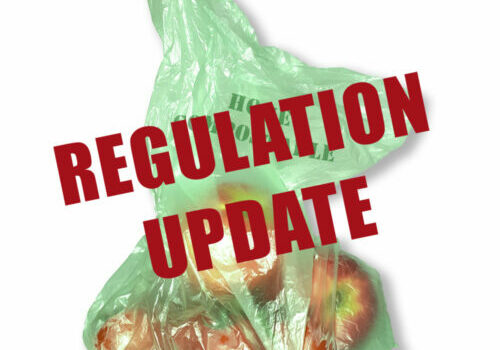
Plastic barrier bags used for loose fruit, vegetables, nuts and confectionary, meat, seafood, or dairy products are being banned in WA. Compostable plastic alternatives are also required to meet new design standards.
This change aims to reduce plastic waste and improve the compatibility of bags with processing systems.
The National Retail Association is offering free online information sessions to support businesses in understanding and complying with the new requirements should you choose to supply a compostable barrier bag.
Register for the free online information sessions:
What’s Changing
Barrier bags used for loose fresh produce, nuts and confectionary, meat, seafood, or dairy products will be required to meet new compostability and design standards. The intent of the change is to reduce single-use plastic waste and improve the compatibility of bags with Food Organics Garden Organics (FOGO) processing systems. The ban comes into effect in two stages.
Banned from 1 October 2025
Plastic bags which do not meet the Design Standard used for loose fruit, vegetables, nuts and confectionary.
Banned from 1 October 2026
Plastic bags which do not meet the Design Standard used for unpackaged meat, seafood or dairy products.
The ban does NOT apply to:
- Reusable fabric bags
- Plastic bread bags, bags used for loose baked goods or bags used for non-food products
- Bags used for goods that are pre-packaged before being placed on sale (e.g. pre-packaged chicken/prawn/grape bags)
- Bags sold on-shelf (e.g. freezer bags)
- Zip-lock or resealable plastic bags
- Compostable plastic barrier bags that comply with the Design Standard.
Mandatory Design Standard
Under the new requirements, all barrier bags must:
- Be certified compostable to either:
- AS 4736 (commercial composting) or
- AS 5810 (home composting)
- Be labelled on the bag with the official Australasian Bioplastics Association (ABA) compostable logo and unique ABA certification number.
- The ABA logo and identification number should be clearly visible, ideally centered and in a high contrast colour.
- Be clear or semi-transparent (not opaque). Untinted or green tinted bags are acceptable.
- Bags should be clear or semi-transparent so the shape and colour of the product inside the bag is clearly visible.
- Bags used for loose fresh fruit and vegetables must also have a minimum opening circumference of 74 cm.
- Opening circumference is taken from the manufacturer’s product listing. (manufacturing tolerances excluded).
- Have no handles
These requirements are aimed at ensuring compostable barrier bags are readily identifiable and usable in household and commercial organics systems.
Recommended Design Features
Businesses are encouraged to consider additional optional features which can further assist in the reuse and/or composting of barrier bags.
- 8 Litre volume is recommended to be more compatible with kitchen caddy bins.
- Green tinting or a thick green band printed across the bag is also recommended to help composters identify bags easily.
These additional features are optional recommendations NOT mandatory requirements.
More Information
More information can be supplied during our free information sessions.
The full design standard can be accessed here>
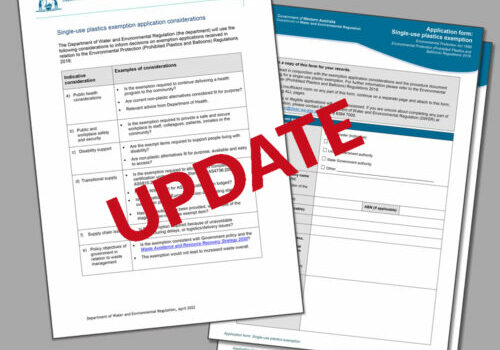
UPDATE:
We understand that some businesses may face genuine unforeseen challenges in transitioning to compliant bags by 1 October.
The Department of Water and Environmental Regulation (DWER) has engaged the National Retail Association to provide a Transition Support Program (TSP) which offers additional support and a pause on enforcement action until 31 March 2026 for businesses experiencing genuine challenges transitioning their produce or barrier bags.
The TSP aims to provide extra support for businesses facing short-term challenges in becoming compliant, while meeting the expectations of the WA public to reduce impact on the environment in a timely manner. By assisting businesses to move to more sustainable options, the TSP also aims to reduce unnecessary disposal of stock to landfill.
The Program is being provided at no charge to businesses and you do not need to be an NRA member.
Want to receive updates, new business resources and details of information sessions?